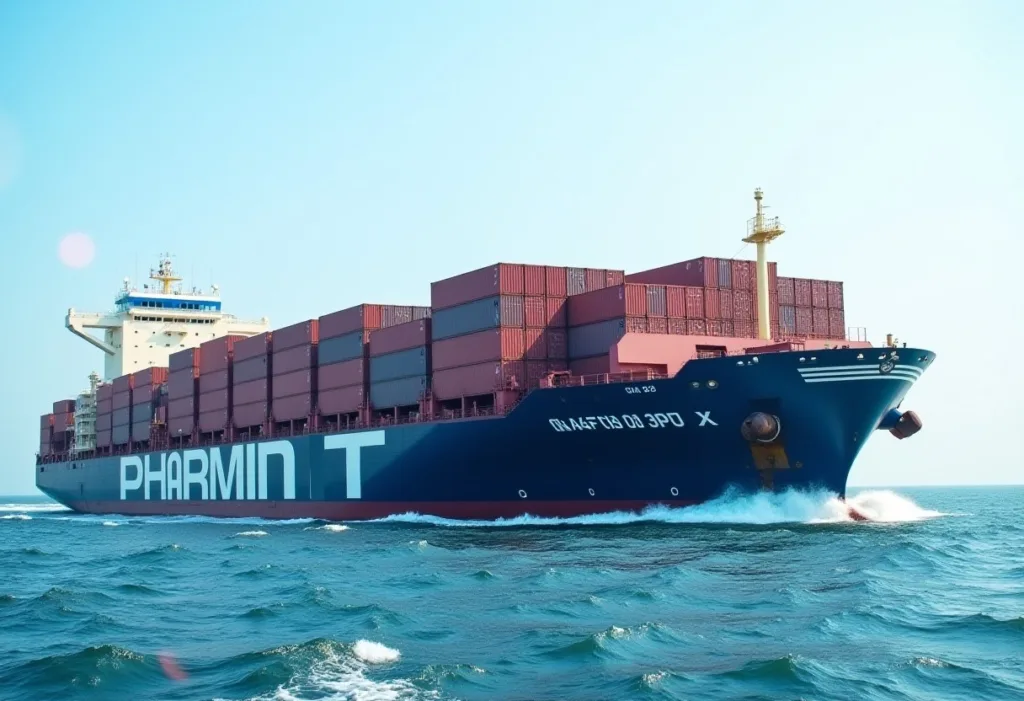
“What happens when new trade taxes instantly raise the price of medicines worldwide?”
In 2025, US President Donald Trump announced steep tariffs on imported pharmaceuticals, APIs, and medical devices from countries including China, the Middle East, Africa, and India, a move aimed at boosting domestic manufacturing capacity (Source).
While the policy seeks to strengthen local industry, it is already raising production costs for drugmakers and increasing healthcare expenses for providers and patients.
This shift is part of a broader global trend where governments are using tariffs as a strategic tool, reshaping how medicines are sourced, priced, and distributed across borders.
For B2B cross-border-pharma-trade companies, the stakes are high: higher landed costs, complex compliance demands, and potential delays in accessing life-saving treatments.
Pharmint, a global B2B pharma procurement platform, helps buyers adapt by connecting them with verified, low-tariff suppliers, modeling costs in real time, and ensuring compliance, so essential medicine flows remain uninterrupted, no matter how trade rules evolve.
However, understanding the current global tariff landscape is the first step in building a supply chain that can survive and even thrive under these new conditions.
Global Tariff Shifts in 2025: A Turning Point for B2B Pharma Trade
In 2025, global trade entered a turbulent phase as major economies adjusted their tariff policies to protect domestic industries and respond to geopolitical shifts. For the pharmaceutical sector, these changes are more than just political moves—they directly influence sourcing costs, supply chain stability, and market access.
As tariffs evolve, B2B pharma buyers face heightened uncertainty, making real-time market intelligence and flexible procurement strategies essential.
Which countries changed pharma tariffs in 2025, and how do they impact trade?
United States – Protectionism and Reshoring Drive
-
- The U.S. significantly escalated import duties, imposing steep tariffs on APIs, intermediates, and medical devicesfrom major suppliers including China, India, and parts of the EU.
- These measures, tied to national security findings and reshoring initiatives, are pushing global manufacturers to reconfigure sourcing strategies.
- Although talk of extending tariffs to biosimilars and advanced therapies continues, partial coverage.
- This shift fosters domestic production capacity but raises costs for international B2B buyers.
European Union – Trade Retaliation and Carbon Compliance
-
- Amid ongoing trade friction with Washington, Brussels has moved toward reciprocal tariffs on branded medicines, potentially escalating transatlantic cost pressures.
- Simultaneously, the EU’sCarbon Border Adjustment Mechanism (CBAM) is entering its next stage, indirectly influencing pharma imports through sustainability compliance on packaging and supply chains with significant carbon footprints.
- EU buyers are increasingly factoring environmental tariffs into procurement decisions.
India – Balancing Export Control and Market Expansion
- India continues leveraging its Production Linked Incentive (PLI) scheme to substantially ramp up domestic API and key starting material (KSM) output, reinforcing its role as a global API hub.
- While full-scale export duties are not a regular feature in 2025, episodic restrictions on certain APIs during domestic shortages underline the government’s priority to safeguard local manufacturing needs.
China – Tariff Pressures and South–South Trade Realignment
- Chinese suppliers remain heavily affected by high U.S. Section 301 tariffs on a broad spectrum of APIs and intermediates, with rates reaching up to 245%.
- In response, China is deepening trade engagement with Africa, ASEAN, and Latin America, creating alternative B2B channels and reducing reliance on U.S. and EU markets.
- Such diversification is reshaping regional sourcing patterns for global buyers.
Emerging Markets – Access-Driven Tariff Easing
-
- Several nations in Africa and Latin America have introduced lower import duties or tariff exemptions on essential generics to address chronic medicine shortages.
- Bilateral trade agreements have become increasingly prominent, granting preferential treatment to suppliers of critical medicines and opening new opportunities for cost-competitive market entry.
A Crossroads for Global Pharma Trade
-
- The cumulative effect of these shifts is a more fragmented yet opportunity-rich global pharma landscape.
- B2B players face a dual imperative: mitigate risks from tariff volatility in established markets while capturing growth in liberalizing emerging markets.
- Flexibility in supply chain design, strategic diversification of trade partners, and proactive regulatory compliance are now central to maintaining competitiveness in this transformed environment.
With tariff landscapes shifting across multiple regions, the real challenge for pharma buyers is not just understanding these changes but adapting procurement strategies to avoid cost spikes, delays, and compliance pitfalls.
In the next section, we’ll explore the mechanisms through which tariffs disrupt B2B cross-border pharmaceutical trade.
In What Ways Do Tariffs Disrupt Cross-Border B2B Pharmaceutical Supply Chains?
Tariffs don’t just add a percentage to an invoice — they ripple through the entire pharmaceutical supply chain. From sourcing decisions to delivery timelines, the effects can be felt at every stage.
Here are the main ways in which tariffs disrupt cross-border pharma trade:
- Rising Landed Costs: When tariffs increase, so does the total landed cost, which includes the product price, shipping, insurance, and customs duties. Even a small percentage hike can make certain formulations unviable for distributors and wholesalers.
- Price Volatility: Sudden tariff changes create unpredictable pricing. Buyers may struggle to set stable procurement budgets, especially for high-demand products like vaccines, oncology drugs, and cardiac medicines.
- Supply Chain Diversion: Higher tariffs often force buyers to reroute sourcing through low-tariff countries. While this can reduce costs, it typically increases lead times and freight expenses.
- Compliance & Classification Risks: Misclassifying products under incorrect HS codes can result in fines, shipment delays, or confiscations. Tariff changes also bring new paperwork and documentation requirements, adding administrative strain.
- Market Access Barriers: In some cases, tariffs are accompanied by stricter import licensing rules, limiting access to certain therapeutic categories or dosage forms.
Understanding these disruption mechanisms is only half the battle. The next step is to see how B2B buyers can actively navigate these challenges — and how platforms like Pharmint offer tools to turn tariff obstacles into competitive advantages.
How B2B Pharma Buyers Can Actively Navigate Tariff Challenges?
While tariff hikes and regulatory shifts are beyond a buyer’s control, there are strategic moves that can minimize risk and preserve margins:
- Diversify Supplier Base Across Regions: Avoid over-reliance on a single country by sourcing from multiple low-tariff or free trade agreement (FTA) partner markets.
- Stay Updated on Trade Policy Changes: Subscribe to real-time tariff, duty rate, and compliance alerts from trusted trade intelligence providers.
- Model Landed Costs Before Committing: Calculate the total delivered cost — including tariffs, freight, insurance, and local taxes — for each sourcing option to prevent budget overruns.
- Have Ready-to-Shift Worldwide Supplier Options: Evaluate suppliers for quality, compliance, and certifications, then keep an updated list so you can quickly switch sourcing locations if tariffs change.
- Use Trade Finance and Payment Security Tools: Manage cash flow effectively and reduce financial risk when shifting suppliers due to new tariff rules.
Even with these best practices in mind, executing them consistently and at speed can be overwhelming — especially when markets shift overnight. This is where Pharmint transforms theory into action, giving B2B pharma buyers the tools to adapt instantly and protect their supply chains from tariff shocks.
How does Pharmint simplify tariff management for B2B pharma buyers?
In a fast-changing trade environment, B2B Pharma Marketplace like Pharmint transforms the complexity of B2B cross-border pharma trade into a streamlined, predictable process. It gives buyers the agility they need to stay competitive even when tariff rules shift overnight by combining global supplier access, compliance verification, and cost modeling in one platform.
1. Real-Time Pricing & Landed Cost Modeling
Pharmint features a real-time pricing calculator that lets buyers see up-to-the-minute product prices, as well as all associated shipping charges and costs (such as freight, tariffs, and taxes).
This transparency enables accurate landed cost modeling, helping buyers compare options and forecast expenses, vital for navigating tariffs and choosing cost-effective sourcing routes.
2. Global Network of Pre-Approved Suppliers
Pharmint connects buyers directly with a global network of pre-approved, GMP-certified suppliers. It verifies certifications such as WHO-GMP, US FDA, EU-GMP, and national regulatory approvals.
Only suppliers passing a stringent compliance and documentation check can list products, ensuring a secure supplier base across multiple regions.
3. Compliance-First Procurement
The platform emphasizes compliance at every step. Buyers can instantly view and verify supplier certifications, Certificates of Analysis (COAs), Material Safety Data Sheets (MSDS), and other documentation to ensure regulatory adherence and smooth customs clearance. Product and supplier eligibility can be filtered and verified by country, streamlining compliance management for cross-border trade.
4. Trade Finance & Secure Transactions
Pharmint facilitates secure international payments and offers trade finance solutions. Payment systems include bank-assisted options (such as escrow, letters of credit, and SWIFT/D&B-backed gateways) to reduce risk. Integrated trade financing is also available to support large-volume imports and manage cash flow.
5. End-to-End Logistics & Customs Support
The platform offers integrated supply chain management with end-to-end logistics support. This includes shipment documentation, insurance, freight booking, customs support, and real-time tracking, centralized within a single interface. Buyers benefit from streamlined operations and reduced delays, with batch-level quality checks and support for third-party audits to ensure product integrity throughout shipping.
6. Price Comparison Tools:
Pharmint lets buyers compare product prices and sourcing options from multiple suppliers to maximize savings, using built-in calculators for direct price transparency.
7. Batch Validation & Quality Inspections:
Quality assurance is provided with batch-level checks, third-party audits, and real-time product documentation for informed purchasing decisions.
8. Marketplace Coverage:
Pharmint’s marketplace spans essential, high-turnover, and niche pharmaceutical products, connecting buyers with API, finished formulations, medical devices, and more, across Africa, LATAM, and Asia.
Pharmint meets all of the advanced requirements for modern B2B pharmaceutical procurement, including real-time cost and compliance intelligence, supplier verification, secure payments, and a robust logistics network, making it a strong platform for buyers needing transparency and agility in complex, cross-border pharma trade.
How can B2B pharma buyers stay agile in a shifting global tariff landscape?
In today’s unpredictable trade environment, agility is the real currency for B2B pharma buyers. Tariffs will continue to shift with geopolitics, but businesses that combine smart sourcing strategies with the right digital tools can maintain supply continuity and profitability.
Pharmint provides the intelligence, network, and compliance backbone to help buyers adapt instantly, ensuring that essential medicines keep moving, no matter how trade rules evolve.
So, don’t wait… Secure your pharma supply chain against tariff shocks. Register today as a buyer and connect with verified global suppliers!!!
B2b Pharma Global Tariffs FAQs
What is the difference between import duty and a pharmaceutical tariff?
Import duty is a general tax on goods entering a country, while a pharmaceutical tariff is a specific duty rate applied to medicines, APIs, or medical devices, often based on HS codes and trade agreements.
How do HS codes affect tariff rates in pharma trade?
HS codes classify pharmaceutical products for customs. The correct code determines applicable tariff rates, exemptions, or preferential duties under trade agreements. Misclassification can cause fines or delays.
Can free trade agreements reduce pharma tariffs?
Yes. FTAs between countries can lower or eliminate tariffs on pharmaceutical products, enabling buyers to import from partner nations at reduced costs or duty-free.
What role do Most Favoured Nation (MFN) rates play in pharma imports?
MFN rates are the standard tariff rates a country offers to WTO members. In pharma trade, they set the baseline duty applied unless a preferential agreement exists.
Are biosimilars subject to the same tariffs as generics?
Not always. Tariff rates can differ for biosimilars and generics depending on classification, HS codes, and the importing country’s policy framework.
Do carbon border taxes impact pharmaceutical imports?
Currently rare, but future carbon-based levies could apply to energy-intensive pharma manufacturing, increasing import costs for certain formulations.
What is the impact of anti-dumping duties on pharmaceuticals?
Anti-dumping duties are extra tariffs on imports sold below market value. In pharma, they protect domestic manufacturers but raise costs for importers.
How do export restrictions affect pharma tariffs?
Export bans or quotas can shift supply-demand balance, leading importing countries to raise tariffs or source from higher-duty markets, increasing overall costs.