

Before placing a bulk Semaglutide API order, the buyer should verify more than price, purity and promised lead time. A supplier can send an attractive quotation and a polished Certificate of Analysis, but the procurement risk is still high if the legal manufacturer, production site, batch documents, regulatory support, sample chain of custody and export route are not clear.
This guide is written for qualified B2B buyers: pharmaceutical manufacturers, importers, distributors, CDMOs, formulation teams and QA/RA teams. It does not provide patient advice, dosing guidance or consumer purchasing information. If your team is already defining a sourcing requirement, Pharmint’s Semaglutide API bulk sourcing page can help you move from checklist to structured RFQ.
Why Semaglutide API Supplier Verification Matters Before a Bulk Order?
Semaglutide API is a sensitive B2B sourcing category because the buyer must manage quality, documentation, regulatory route, import rules, storage conditions and final product use. Verification should start before a purchase order is issued, not after a deposit has been paid.
The U.S. FDA’s CGMP overview explains that current good manufacturing practice systems are used to assure drug identity, strength, quality and purity through manufacturing controls, quality systems, appropriate raw materials, deviation investigation and reliable testing laboratories. FDA also states that it inspects pharmaceutical manufacturing facilities worldwide, including facilities that manufacture active ingredients and finished products. Those points are useful for buyers because they show why a supplier’s quality claim needs evidence, not just a brochure statement.
For APIs specifically, FDA’s Q7 guidance covers operations such as receipt of materials, production, packaging, labeling, quality control, release, storage and distribution. A Semaglutide API supplier check should therefore follow the material from manufacturer identity through release and shipment, rather than treating a single document as complete proof.
Confirm the Semaglutide API Manufacturer, Supplier and Site
The first step is to identify who is actually responsible for the material. In API sourcing, the company sending the quote may be the manufacturer, an exporter, a distributor, a trader, a sourcing platform or a sales agent. Each role carries a different verification burden.
-
Separate Seller Identity from Manufacturing-Site Identity
Ask the supplier to name the legal manufacturer, the physical manufacturing site, the release-testing site, any subcontracted testing or packaging site, and the commercial seller. The names and addresses should be consistent across the quotation, invoice, COA, SDS, GMP evidence, packing list and export documents.
If a supplier cannot disclose the manufacturer until payment, treat that as a risk signal. Some confidentiality is normal in competitive API sourcing, but a qualified buyer should be able to review site identity under NDA before approving a bulk order.
-
Check Business Registration, Export Authority and Sanctions Risk
Confirm that the legal seller exists, can issue commercial documents, and is authorized to sell or export the offered material. For higher-risk or regulated markets, add counterparty checks such as business registration, beneficial ownership, export authorization, sanctions screening and trade references.
The goal is not to create paperwork for its own sake. The goal is to avoid paying a party that cannot legally supply the material, cannot prove its relationship with the manufacturer, or cannot support a complaint, deviation, return or recall investigation.
-
Verify the Semaglutide API COA, Specification and Analytical Data

A COA is central to API sourcing, but it is only one part of the evidence set. Pharmint’s broader guide to COA, SDS and regulatory certificate review explains why quality documents matter in cross-border pharma trade. For Semaglutide API, the buyer should go deeper and confirm that the documents match the exact supplier, site, batch and intended use.
-
Match the Semaglutide API COA to the Batch and Specification
Request a batch-specific COA and compare it with the approved specification. Confirm product name, CAS number, batch number, manufacturing date, retest or expiry date, test methods, acceptance criteria, actual results, analyst or quality-unit approval, and manufacturer identity. The COA should not be a generic sample document unless it is clearly marked as a sample for prequalification.
For Semaglutide API, pay close attention to assay, identity, purity, related substances, residual solvents, water content, peptide-related impurities, microbial limits where relevant, appearance, storage condition and packaging. If the COA references internal methods, ask whether method summaries or validation evidence can be shared under NDA.
-
Review Semaglutide API Impurity, Stability and Method Evidence
Do not approve a supplier based only on a headline purity number. Ask for an impurity profile, stability summary, storage data, analytical method overview and change-control history relevant to the offered grade and intended destination. If the material is for regulated development or manufacturing, your QA/RA team may also need open-part DMF information, Letter of Authorization workflow, CEP status where applicable, or destination-market dossier support.
| Evidence to Request | What to Verify | Risk if Missing |
|---|---|---|
| Batch COA | Batch number, specification, methods, results, release approval and manufacturer identity. | The document may not represent the material being quoted or shipped. |
| Approved specification | Assay, impurities, residual solvents, water, microbial limits where relevant, packaging and storage. | Quotes cannot be compared on the same quality basis. |
| Impurity profile | Known, unknown and process-related impurities plus method suitability. | A high purity claim may hide unresolved impurity risk. |
| Stability data | Storage condition, retest period, packaging configuration and excursion handling. | The buyer may accept a material without enough shelf-life or storage support. |
| SDS/MSDS | Handling, storage, transport and safety information. | Logistics and warehouse teams may lack required safety instructions. |
Check Semaglutide API GMP Evidence, DMF Support and Regulatory Documents
Competitor supplier pages often use phrases such as GMP-certified, USDMF on file, full dossier, audited manufacturer and regulatory package. Those terms can be useful, but each one should be tied to a document, issuing body, date, scope and site.
-
Verify GMP Evidence by Site, Scope, Issuer and Date
Ask for current, site-specific GMP evidence. Check which site it covers, which activities it covers, who issued it, when it was issued, whether it is still valid, and whether the scope includes the relevant API manufacturing or release activity. A general company certificate is weaker than evidence tied to the actual manufacturing site and API operation. For a broader supplier due-diligence framework, review Pharmint’s guide to identifying GMP-certified API manufacturers.
For markets with specific regulatory requirements, confirm whether the supplier has inspection history, audit support or regulator-facing documentation that your buyer, quality unit or local authority can rely on. Do not state that a supplier is FDA-approved, EU GMP compliant or WHO-GMP certified unless the exact evidence supports that wording.
-
Confirm DMF, CEP, LOA and Country-Specific Dossier Support
DMF, CEP, ASMF, Written Confirmation, Letter of Authorization and country-specific registration support are not interchangeable. Ask which document exists, which authority or market it relates to, who owns it, whether the buyer can access it, and what steps are needed to issue an LOA or equivalent support.
For some projects, a supplier may be suitable for R&D but not ready for a commercial or regulated-market file. For other projects, the supplier may have a strong dossier but limited availability, high MOQ or a long lead time. Verification should connect the regulatory document to the commercial order, not review documents in isolation.
Approve Semaglutide API Samples, Packaging and Logistics Before Purchase
After the document screen, move to controlled sample and logistics checks. A sample should not be treated as proof that future commercial batches will match, but it can help the buyer evaluate identity, packaging, communication quality and analytical fit before a larger commitment.
-
Test Semaglutide API Samples Through a Qualified Laboratory
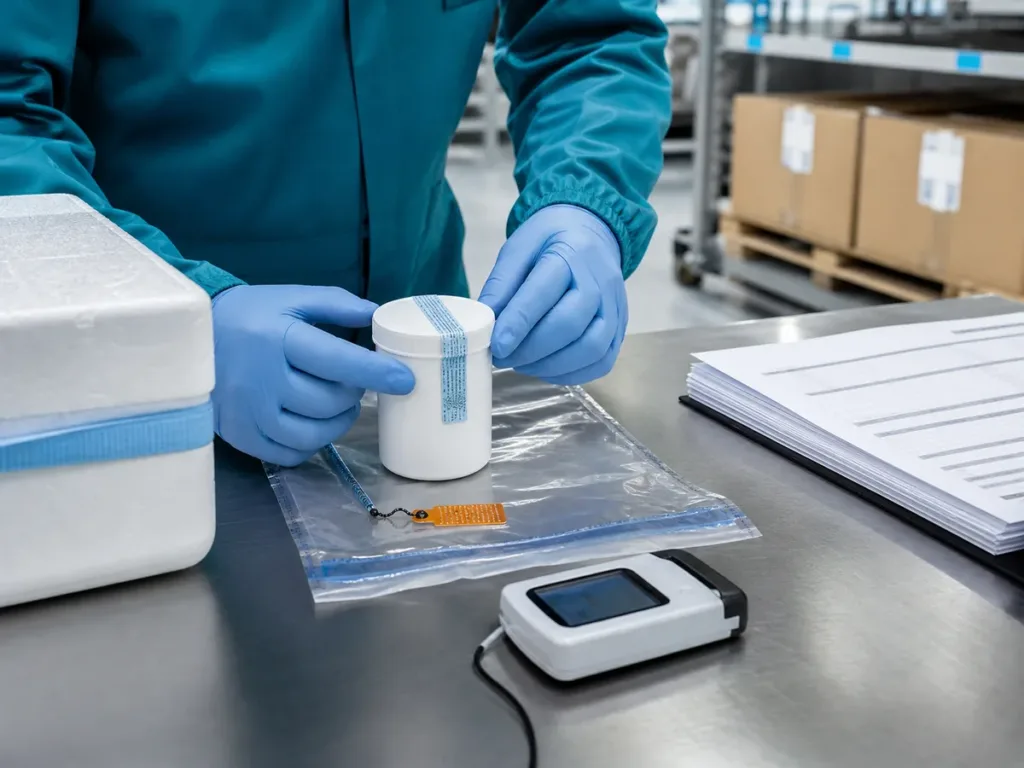
Define the sampling plan before the supplier ships the sample. Confirm sample size, batch reference, seal, label, COA, chain of custody, storage condition and whether the sample comes from a commercial batch or development batch. Test the sample through a qualified laboratory against an approved method or a justified screening method.
If sample testing fails, pause commercial negotiation until the discrepancy is resolved. Do not accept a discount as a substitute for investigation. If the sample passes, still confirm whether the commercial batch will be from the same manufacturing route, specification, packaging and release procedure.
-
Align Packaging, Storage, Transport and Import Documents
Before issuing the purchase order, confirm pack size, container closure, tamper evidence, storage conditions, temperature monitoring, Incoterms, insurance, customs documentation, invoice, packing list, country of origin, SDS, COA, import permit requirements and destination-market restrictions. If your destination market is Nigeria, Pharmint’s Semaglutide API Nigeria bulk-order guide covers country-specific import and documentation considerations. If independent inspection is appropriate, Pharmint’s quality inspection support can be part of the sourcing plan.
The purchase order and quality agreement should define what happens if the supplier changes the manufacturing site, process, specification, pack, testing method, subcontractor or shipment lane. Without that change-control language, a buyer may approve one source and receive another risk profile later.
Semaglutide API Supplier Red Flags to Resolve Before Payment
Some red flags do not automatically disqualify a supplier, but they should be resolved before payment, shipment or final supplier approval.
- The supplier refuses to identify the manufacturer or production site under NDA.
- The quote promises extreme purity, very low price or immediate bulk availability without matching evidence.
- The COA has no batch number, no release date, no method references or inconsistent company details.
- GMP claims are generic and not tied to the actual site or activity.
- DMF, CEP or LOA claims are made verbally but not supported by a documented workflow.
- The supplier cannot explain storage conditions, retest period, packaging or excursion handling.
- Sample labels, batch references or seals do not match the documents.
- The seller pushes for payment before buyer qualification, document review or import-route checks.
- The supplier uses consumer weight-loss language instead of API procurement, quality and regulatory terminology.
- The supplier cannot support complaints, deviations, returns or recall communication.
How Pharmint Supports Verified Semaglutide API Sourcing
Pharmint can help qualified buyers convert a Semaglutide API requirement into a structured RFQ, compare supplier responses, organize documentation requests and identify where a supplier claim needs more evidence. This is especially useful when multiple offers mention COA, GMP, DMF, stability, MOQ or lead time in different formats.
Pharmint does not replace the buyer’s quality unit, regulatory adviser, legal counsel, laboratory or destination authority. Final supplier approval, import eligibility, testing, regulatory filing and batch release remain the responsibility of the licensed parties.
If your organization has a defined product requirement, intended use, target quantity, destination country and document needs, visit Pharmint’s Semaglutide API product page to review the B2B sourcing details and request supplier options. Include the required quantity, preferred specification, packaging, timeline, document list, sample-testing expectations and destination-market constraints. You can also browse Pharmint’s category for bulk APIs and pharmaceutical raw materials to support broader sourcing work, or use the request quote form when your RFQ packet is ready.
Semaglutide API Supplier Verification FAQs
Is a Semaglutide API COA enough to approve a supplier?
No. A COA is important, but it should be reviewed with manufacturer identity, site-specific GMP evidence, approved specification, impurity data, stability information, SDS, DMF or dossier support where relevant, sample testing and import-route checks.
What documents should I request before a bulk Semaglutide API order?
Common requests include a batch COA, SDS/MSDS, approved specification, impurity profile, stability summary, GMP evidence, manufacturing-site details, DMF or LOA workflow where relevant, invoice, packing list, country-of-origin documents and shipment condition records.
How do I verify a GMP Semaglutide API supplier?
Ask for current, site-specific GMP evidence and check the issuer, date, scope, site address and covered activities. Then compare that evidence against the quoted manufacturer, batch documents and intended market. Do not rely on a generic GMP logo or unverified claim.
Should sample testing happen before payment?
For serious bulk procurement, sample testing or a documented sample-review plan should happen before final supplier approval and major payment exposure. The exact sequence depends on buyer policy, supplier terms, country requirements and project urgency.
What should I include in a Pharmint Semaglutide API RFQ?
Include your legal entity, buyer type, destination country, intended use, target quantity, required specification, document list, sample requirements, packaging preference, delivery timeline, inspection needs and any regulatory constraints.

