


Have you ever worried if your local clinic has the medicines to treat you quickly during an emergency?
In healthcare, readiness starts with the right medicines — not just any drugs, but finished formulations that are safe, accessible, and immediately usable. From fever and infections to blood pressure spikes or dehydration, every essential care clinic depends on a well-curated medicine inventory to deliver fast, reliable treatment.
According to a 2020 study published in the National Library of Medicine (PMC6901066),
- Nearly 2 billion people globally have no access to essential medicines.
- No access means medicines are unavailable, unaffordable, inaccessible, unacceptable, or of low quality.
- We showcase successes and challenges of improving access to medicines in LMICs.
The same study highlights that improving access to essential medicines is one of the most effective ways to strengthen health systems and improve population health worldwide. (Source).
That’s why Pharmint created this guide on the Top 15 Finished Drugs to Stock for Essential Care Clinics, focusing on the medicines every clinic should keep on hand to stay ready for common and critical conditions.
List of Top 15 Finished Drugs Every Essential Care Clinic Should Stock Right Now!
If you’ve ever asked yourself, “What medicines should every clinic keep ready for emergencies?” — this section gives you a clear, clinically grounded answer.
Each of the following finished drugs is part of the World Health Organization (WHO) Model List of Essential Medicines and aligns with primary healthcare treatment standards.
These are not random picks — they’re the core pharmaceutical essentials that support everyday patient care, emergency response, and community health readiness.
1. Paracetamol (Acetaminophen) – The Core Analgesic and Antipyretic
A frontline analgesic and antipyretic medicine used for fever management and pain relief in adults and children. Paracetamol remains the safest first-line treatment for viral fever, headaches, post-operative pain, and mild musculoskeletal discomfort.
2. Ibuprofen / Diclofenac – Essential Anti-Inflammatory Agents
These non-steroidal anti-inflammatory drugs (NSAIDs) are used to relieve pain, inflammation, and swelling caused by arthritis, sports injuries, or post-surgical recovery. They allow clinics to manage acute injuries and chronic joint pain effectively while offering affordable, fast-acting relief.
3. Amoxicillin (± Clavulanate) – Broad-Spectrum Antibiotic for Common Infections
A widely trusted broad-spectrum antibiotic that treats respiratory infections, ear infections, and skin or soft tissue bacterial infections. Often prescribed in primary healthcare and family practice clinics, it’s crucial for managing strep throat and community-acquired pneumonia.
4. Ciprofloxacin – Effective Treatment for UTIs and GI Infections
A fluoroquinolone antibiotic effective against urinary tract infections (UTIs), gastrointestinal infections, and bacterial diarrhea. It’s highly valued for its wide microbial coverage and quick patient response, particularly in low-resource clinical settings.
5. Metronidazole – Anaerobic and Parasitic Infection Control Drug
An antimicrobial and antiprotozoal medication used to treat anaerobic infections, bacterial vaginosis, and amoebiasis. It’s one of the most essential drugs for managing dental infections, wound abscesses, and gastrointestinal infections where oxygen-free bacteria thrive.
6. Gentamicin Injection – Emergency Antibiotic for Severe Infections
A parenteral aminoglycoside antibiotic is critical for severe bacterial infections, including sepsis, meningitis, and neonatal pneumonia. It’s part of the emergency antibiotic kit in nearly every essential care facility and must be administered under clinical supervision.
7. Oral Rehydration Salts (ORS) – Essential for Dehydration Management
A life-saving electrolyte solution used for rehydration therapy in cases of diarrhea, vomiting, and heat-related dehydration. ORS helps prevent hypovolemic shock, especially in children and elderly patients, and is mandatory for every clinic’s emergency care stock.
8. Salbutamol (Albuterol) – Life-Saving Respiratory Relief Medicine
A bronchodilator medication used for asthma relief, COPD management, and acute bronchospasm. It rapidly relaxes airway muscles, helping patients breathe easier during asthma attacks — making it an indispensable rescue inhaler for primary care and emergency clinics.
9. Amlodipine – Daily Blood Pressure Control Medication
A calcium channel blocker is prescribed for high blood pressure and chronic heart disease. It’s one of the most commonly used once-daily antihypertensive medications in essential care clinics due to its reliability, low cost, and long-term safety profile.
10. Hydrochlorothiazide – Supportive Diuretic for Hypertension
A thiazide diuretic used to manage hypertension, congestive heart failure, and fluid retention. Often combined with Amlodipine or ACE inhibitors, it enhances blood pressure control while supporting heart and kidney function.
11. Insulin (Regular or Analog) – Critical Drug for Diabetes Management
A biologic antidiabetic hormone vital for diabetes management, hyperglycemia control, and emergency diabetic care. Clinics must store insulin under proper refrigeration (2–8°C) to maintain potency and ensure patient safety.
12. Iron + Folic Acid Tablets – Essential Nutritional Supplement
A nutritional supplement essential for anemia prevention and maternal health support. Regular use helps reduce fatigue and improve blood hemoglobin levels — crucial for pregnant women, children, and malnourished patients.
13. Normal Saline (0.9% Sodium Chloride) – Universal IV Rehydration Fluid
A sterile intravenous solution used for fluid replacement, IV rehydration, and wound irrigation. It’s the foundation for emergency IV therapy and drug dilution, making it indispensable for both minor and major clinical procedures.
14. Lignocaine – Local Anesthetic for Procedures
A local anesthetic agent widely used for minor surgical procedures, wound suturing, nerve block anesthesia, and dental operations. It ensures pain-free care and improves patient comfort during outpatient interventions.
15. Ondansetron – Nausea and Vomiting Control Medicine
A serotonin 5-HT3 receptor antagonist that prevents nausea and vomiting associated with infection, chemotherapy, or post-surgery recovery. It offers rapid symptom control and patient relief, ideal for outpatient and emergency settings.
Now that we’ve covered the 15 essential finished drugs every clinic should have, it’s equally important to focus on how these medicines are stored and managed. Even the most complete drug list loses its value if medicines are expired, improperly stored, or hard to track during emergencies.
In the next section, we’ll explore how to choose the right drugs for your clinic — balancing medical needs, cost, and compliance so your facility always remains equipped to provide dependable care every day.
How to Choose the Right Drugs for an Essential Care Clinic?
If you’re wondering how to choose the right medicines for your essential care clinic,
- Start by focusing on your patients’ most common health problems.
- Think about what you treat most often — fever, infections, high blood pressure, or dehydration.
- Next, make sure each medicine you stock is safe, easy to store, affordable, and approved by trusted health authorities such as the World Health Organization (WHO) or the National List of Essential Medicines (NLEM).
- Always check storage stability — some drugs, like insulin, need refrigeration, while others can stay at room temperature for long periods.
- Finally, plan your inventory rotation carefully so no medicine expires before use.
This approach ensures your clinic is always ready, compliant, and cost-effective, ready to handle everyday cases and unexpected emergencies.
In the next section, we’ll look at the best practices for storage, handling, and documentation to help your clinic maintain safety, compliance, and readiness at all times.
How Should Essential Care Clinics Store, Handle, and Document Their Medicines?
Following a few core steps keeps your essential care clinic safe, compliant, and always ready.
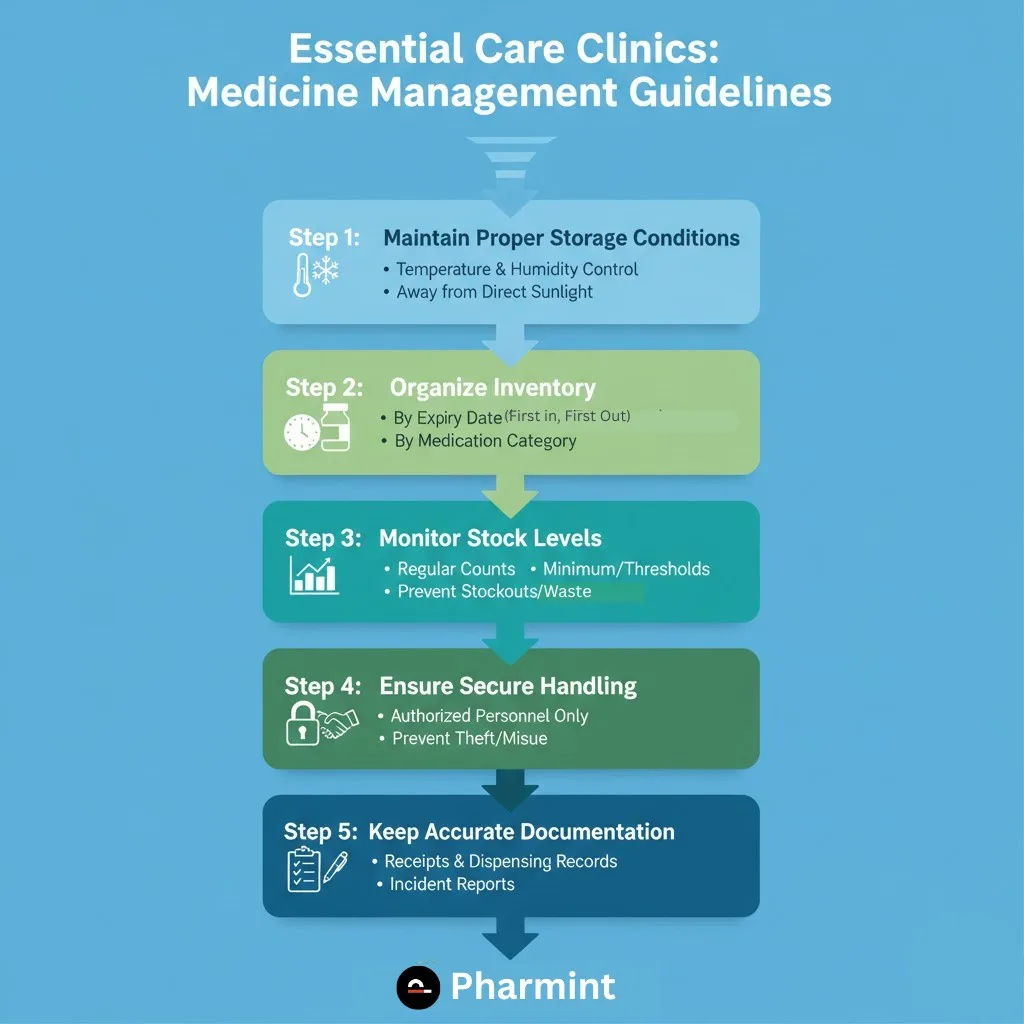
Step 1 – Maintain Proper Storage Conditions
- Each medicine has unique temperature and light requirements.
- Keep temperature-sensitive medicines such as insulin or vaccines in a medical refrigerator at 2 °C – 8 °C, and store tablets and syrups away from direct sunlight or humidity.
- Use a digital thermometer and record readings in a daily temperature log.
Step 2 – Organize Inventory by Expiry and Category
- Apply the FIFO (First In, First Out) method so older batches are used before new ones.
- Group drugs by therapeutic category—pain relief, antibiotics, antihypertensives, emergency care—to improve accessibility.
- Label shelves clearly with generic and brand names for accuracy and safety.
Step 3 – Monitor Stock Levels Proactively
- Set minimum stock thresholds for each essential medicine and review supply weekly.
- Use color-coded bins or digital inventory software that auto-alerts when levels run low.
- This helps prevent shortages and ensures continuous patient care.
Step 4 – Ensure Secure Handling and Accountability
- Keep controlled substances and high-risk injectables in a locked cabinet accessible only to authorized staff.
- Record every use in a controlled-drug register to comply with national regulations.
- Provide routine staff training on safe handling and incident reporting.
Step 5 – Keep Accurate Documentation
- Maintain complete purchase records, batch numbers, supplier details, and dispensing logs.
- Schedule periodic internal audits to identify expired stock and confirm compliance with WHO Good Storage Practices.
- Proper documentation ensures traceability and builds patient trust.
Proper storage and handling are only part of the equation. To make every stocked medicine truly valuable, it must also align with recognized global and national standards. That’s where healthcare compliance frameworks like the World Health Organization (WHO) Essential Medicines List and India’s National List of Essential Medicines (NLEM) come in.
They ensure that every clinic’s formulary is not just practical—but also safe, evidence-based, and compliant with international best practices.
How do the WHO & NLEM Guidelines Ensure Compliance in Essential Care Clinics?
Both the World Health Organization (WHO) Essential Medicines List and India’s National List of Essential Medicines (NLEM) act as reference frameworks for what medicines every clinic should stock.
These guidelines help clinics choose safe, effective, and affordable drugs, reducing duplication and ensuring consistent quality across healthcare systems.
By aligning your clinic’s formulary with these standards, you strengthen treatment reliability, simplify audit compliance, and support universal access to essential healthcare.
Why the Right Finished Drugs Keep Clinics Ready for Every Patient?
Every essential care clinic’s strength lies not just in its staff or equipment, but in the finished drugs it keeps ready for every patient who walks in.
A well-curated, compliant, and properly managed stock ensures faster recovery, safer outcomes, and lasting community trust.
If you’re looking to build or optimize your essential care clinic’s medicine inventory, Sign up as buyer on Pharmint for expert guidance and customized finished drugs stocking solutions that help your facility stay ready—always.
Common Questions on Essential Medicine Management for Clinics
How can clinics safely dispose of expired or unused medicines?
Clinics should follow biomedical waste guidelines for medicine disposal. Expired or unused drugs must be sealed, labeled, and handed to authorized waste handlers to prevent contamination, misuse, or environmental damage.
What role does staff training play in medicine management?
Regular staff training ensures proper drug handling, temperature control, and documentation. Trained personnel reduce errors, maintain compliance, and improve patient safety in essential care clinics managing finished drugs.
How do seasonal diseases affect a clinic’s drug stocking strategy?
Seasonal diseases like flu or dengue influence medicine demand. Clinics should adjust inventories ahead of outbreaks to stock antipyretics, antibiotics, and hydration solutions, ensuring quick response during high-risk months.
What technology can streamline medicine tracking in clinics?
Pharmacy management software automates inventory tracking, expiry alerts, and reorder levels. It helps clinics maintain accurate stock data, comply with audit requirements, and prevent shortages of essential finished drugs.
How can small clinics build cost-effective medicine inventories?
Small clinics can optimize costs by prioritizing high-turnover essential drugs, purchasing through government or cooperative procurement systems, and maintaining lean stock levels based on local patient demand and treatment patterns.
Medical References Used:
- https://www.who.int/publications/i/item/WHO-MHP-HPS-EML-2023.01
- https://nhm.gov.in/New_Updates_2018/Om_and_orders/hss/free_drugs/Final_Facility_Wise_EDL.pdf
- https://cdsco.gov.in/opencms/resources/UploadCDSCOWeb/2018/UploadConsumer/nlem2022.pdf
- https://www.who.int/publications/i/item/9789240018190
- https://pmc.ncbi.nlm.nih.gov/articles/PMC6901066/
- https://www.who.int/teams/health-product-policy-and-standards/essential-medicines
- https://www.nice.org.uk/guidance/ng5

