

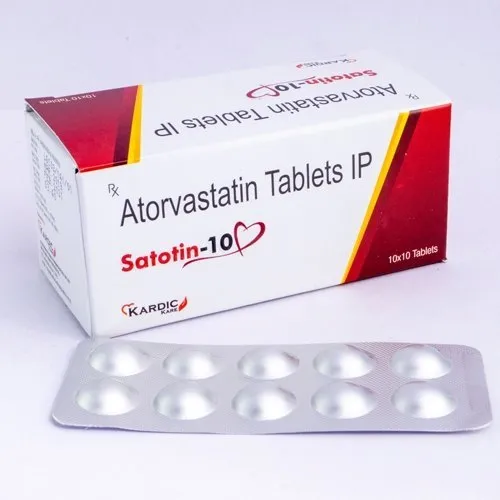

The prescribed dose of Atorvastatin Tab is daily once a day at the same time. Your doctor will advise you on how often you take your tablets based on your medical condition. You can take Atorvastatin Tab with food or without food. It should be swallowed whole with a glass of water. Do not chew, bite, or break it. In a few cases, you may experience allergic reactions, hyperglycaemia (excess of glucose in the bloodstream), headache, vision blurred, pain, constipation, nausea, diarrhoea, muscle spasms, joint swelling, and back pain. Most of these side effects of Atorvastatin Tab do not require medical attention and gradually resolve over time. Consult your doctor immediately if you have yellowing eye/skin (jaundice), dark urine, or repeated unexplained muscular pain.
Atorvastatin Tab may cause a breakdown of skeletal muscle tissue, leading to kidney failure. This condition usually occurs in the elderly, people with kidney disease, and poorly controlled hypothyroidism (underactive thyroid). Atorvastatin Tab should not be prescribed to children less than ten years of age. You should contact a doctor before if you have had an allergic reaction to Atorvastatin Tab , have liver or kidney problems, pregnant or planning to get pregnant, are breastfeeding, have severe lung disease, have a previous heart attack or stroke caused by bleeding in the brain, have hypothyroidism, drink more than two servings of alcohol per day and have a muscle disorder (fibromyalgia). The efficiency of Atorvastatin Tab can be increased by taking low-fat or cholesterol-containing food and drinks.
Atorvastatin Tab taken with dietary measures helps treat high cholesterol, especially for heart patients when initial dietary measures fail to lower cholesterol. It helps lower the bad cholesterol (LDL) and increases the level of good cholesterol (HDL) in the state of dyslipidaemia or hyperlipidaemia. Atorvastatin Tab is considered more effective compared to other statins. Atorvastatin Tab also lowers the amount of fat or cholesterol deposition (plaque) in the heart’s arteries, thereby reducing the chance of having a heart attack or stroke in the future.



Reviews
There are no reviews yet.